Dry-brine a 4–5 lb finished bird overnight with 1½ tablespoons of kosher salt. Roast 20 minutes at 425°F to set the skin. Drop to 350°F and baste with butter. Pull at 170–172°F in the thigh and 160–162°F in the breast. Rest 20 minutes, tented. Make a jus from the drippings and carve.
Why does this recipe work?
Every step hands work to the bird. The dry brine is just salting the night before. It does two quiet jobs at once. Salt travels into the meat. The fridge air dries the skin. Seasoning goes deep, and crispness is decided before the oven turns on. No wet brine here. A marbled bird needs no borrowed water.
The two-stage oven respects the fat. Twenty minutes at 425°F sets and colors the mature skin. The drop to 350°F renders the fat inside the muscle slowly. It bastes the meat from within instead of flooding into the pan. The butter baste is insurance and gloss, not a rescue.
The numbers run early on purpose. Pull at 160–162°F in the breast, because a tented, resting bird keeps cooking. Carryover heat closes the gap to the safe 165°F. The rendered fat settles back through the meat. Pull early. Rest long. Carve where the juices land. The whole recipe is those three habits with numbers attached.
What do you need?
Six ingredients for the bird, two more for the jus. The only special tool is a probe thermometer:
Ingredients, serves 4–6
- 1 whole finished American Bresse chicken, 4–5 lb. The 16–19 week classic table bird. A well-finished heritage bird also works. A supermarket roaster survives the recipe but cannot deliver its point.
- 1½ tbsp kosher salt (about 1 tbsp if using fine sea salt).
- 3 tbsp unsalted butter, softened. Two for the skin, one for the baste.
- 1 lemon, halved, and 1 head garlic, halved crosswise.
- 4–5 sprigs thyme and ½ tsp black pepper.
- For the jus, the pan sauce: ⅔ cup water or light stock, plus an optional splash of dry white wine.
Equipment: a heavy oven-safe skillet or a low-sided roasting pan (high walls steam the legs), kitchen twine, a probe thermometer, and a carving board with a juice groove. Skip the rack. Pan contact browns the back and feeds the jus.
How does the timing run?
Read this once as a schedule before you start. After the brine, everything happens inside about three hours:
- The night beforePat the bird fully dry. Salt it all over, cavity included. Set it on a rack over a plate. Refrigerate it uncovered. Four hours is the minimum. Overnight is better.
- 1 hour beforeTake the bird out of the fridge. Heat the oven to 425°F with a rack in the lower third. Pat the skin dry again. Drier skin means a crisper finish.
- 10 minutes beforePut the lemon, garlic, and thyme in the cavity. Rub 2 tablespoons of butter over the skin. Grind on the pepper. Tie the legs together.
- 0:00 · into the ovenRoast breast up in a heavy pan at 425°F for 20 minutes. The skin sets and starts to color.
- 0:20 · turn it downLower the oven to 350°F. Melt the last tablespoon of butter. Baste with it and the drippings at 0:30 and 1:00. Start checking temperature at 1:10.
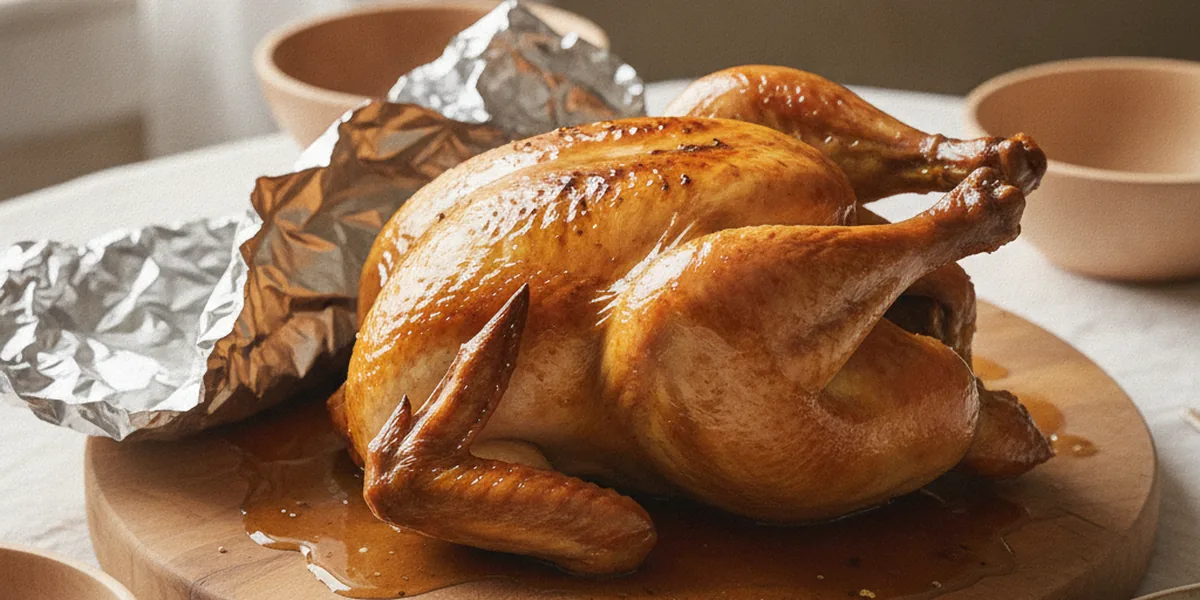
- ~1:20–1:35 · pull itPull when the thigh reads 170–172°F and the breast 160–162°F. Move the bird to a warm platter. Tent it loosely with foil.
- The rest · 20 minutesRest 20–25 minutes. Make the jus in the pan while you wait. Then carve on the board and spoon the board juices back over.
What about the sauce?
A jus, and only a jus. A jus is a thin sauce made from the pan drippings. This bird's drippings beat any gravy you could build over them. While the bird rests, pour off all but about a tablespoon of fat. Set the pan over medium heat. Add the water or stock, and the wine if you use it. Scrape up every browned bit. Simmer two or three minutes. Squeeze in the roasted lemon from the cavity. Salt only if it needs it. Strain into a warm pitcher.
No flour. No cream. No tricks. The rendered fat carries the breed's flavor, and the browned bits are concentrated already. Too thin? Simmer another minute. Too strong? Loosen it with a spoonful of water. That is the whole craft of it.
What goes wrong, and how do you fix it?
Four failures cover nearly every disappointing roast. Each has a cause you can name and a fix you can use next time:
| Symptom | Usual cause | The fix |
|---|---|---|
| Pale, soft skin | Damp skin at oven time, or an oven running cool | Pat dry twice: after brining and before buttering. Check with an oven thermometer. Last resort: 425°F for a final 5 minutes. |
| Dry breast | Pulled at 165°F or higher, or rested too short | Pull at 160–162°F and trust carryover. The rest is part of the cooking. |
| Thigh lagging behind breast | Legs shielded or tied unevenly | Tie the legs snugly and keep the pan's walls low. If it persists, start the bird thighs toward the oven's back wall, the hotter zone. |
| Timing off for your bird | Weight outside the 4–5 lb window | Hold the 20-minute skin set. Then figure about 15 minutes per pound at 350°F. Let the thermometer, not the clock, call the finish. |
One note on sourcing, since the bird is nine-tenths of the outcome. The finished table birds this recipe assumes come farm-direct from the breeders in the national directory at AmericanBresse.com. The buying guide covers what to ask for. And when this roast has convinced you, the rest of the repertoire lives in the recipe book at americanbressechickens.com. The cream classic, poach-then-crisp, and the holiday capon chapters. A capon is a male bird neutered young for a richer roast. The book is the paid next step, plainly labeled.
The Bresse Menu Notes
This roast as a printable kitchen card, plus the cook-by-age chart and the resting rules. One sheet for the wall beside the oven.
Recipe questions, answered
Can you make this recipe with a regular chicken?
Yes, and it may be the best roast chicken your oven has made. The dry brine and the long rest improve any bird. What a supermarket bird cannot supply is the marbling. So the butter baste matters more, and the margin for overcooking is thinner. Watch the thermometer closely.
Why a dry brine instead of a wet brine?
This bird does not need added water. It carries its moisture as fat inside the muscle. A wet brine plumps lean birds at the cost of watered flavor and soggy skin. The dry brine does the two jobs that help here. It seasons the meat deeply, and it dries the skin so it crisps.
What if the skin is not browning?
Almost always one of three causes. The skin went into the oven damp. The oven runs cooler than its dial claims. Or the bird sat too low. Pat the skin truly dry after the brine. Check the oven with a separate thermometer. As a last resort, return the finished bird to 425°F for five minutes.
Do you really need to rest it 20 minutes?
Yes. The rest is where this breed pays you back. The rendered fat needs time to settle back through the meat. Carryover heat needs time to close the last few degrees. A tented bird stays hot for over half an hour. Nothing is lost by waiting. Most of the juice is lost by not.
Can you stuff the bird?
Keep the cavity to aromatics: lemon, garlic, thyme. A packed stuffing slows the roast and throws off the timing. It pushes the breast past its pull temperature before the stuffing's center is safe. Bake dressing separately, moistened with the jus.