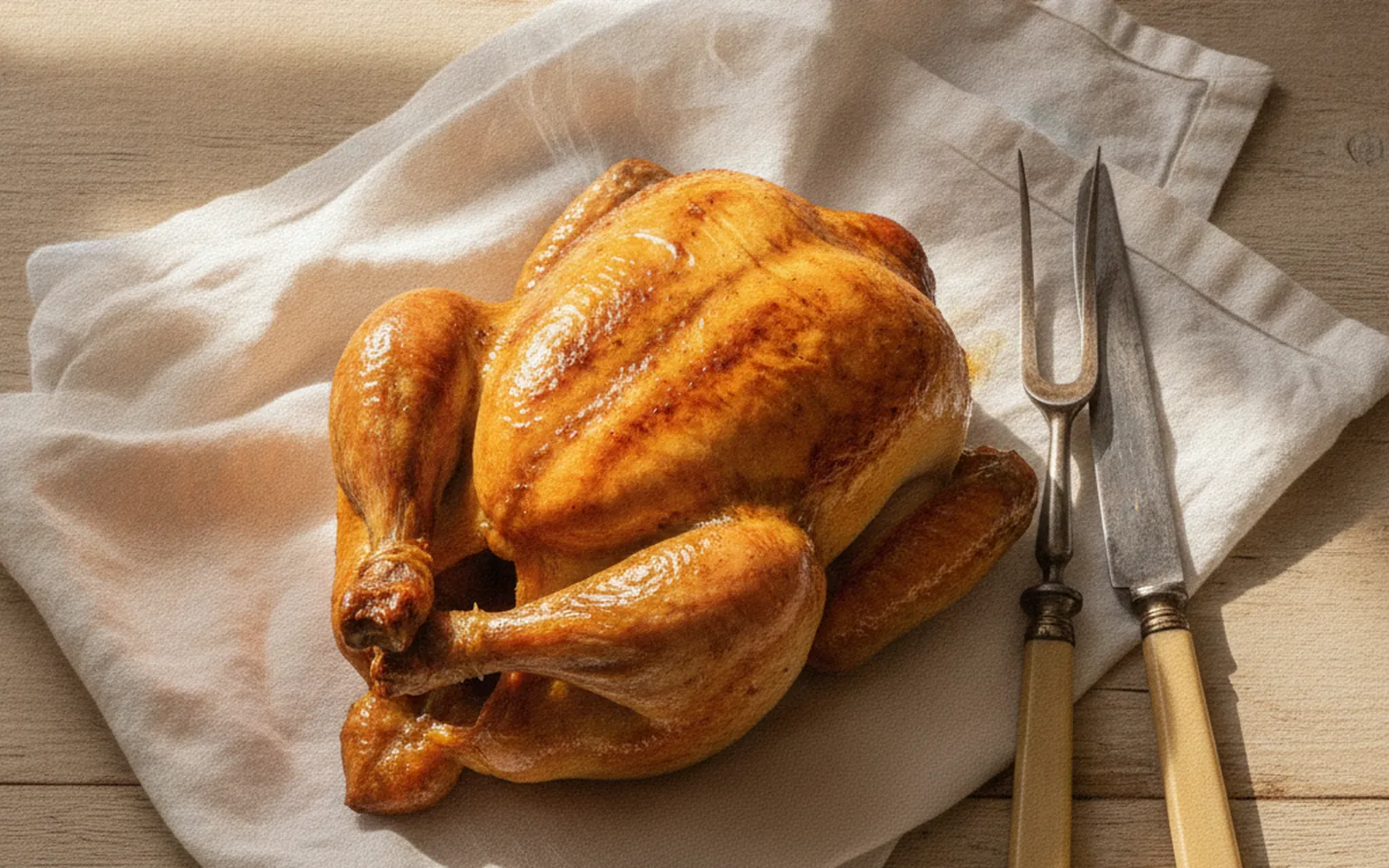
A Bresse-class chicken carries fat inside the muscle, so it bastes itself. Cook it more gently than a supermarket bird. Salt it the night before. Set the skin at 425°F. Finish at 350°F. Pull the breast at 160–162°F. Rest a full 20 minutes. The complete roast recipe on this site is free.
What makes a Bresse chicken different to cook?
The fat sits inside the meat. Not under the skin. Not in a pad at the cavity. It runs through the muscle the way marbling runs through good beef. A supermarket broiler is processed young and lean. Every recipe written for it fights dryness: wet brines, bacon blankets, flipping, foil. A finished Bresse-class bird arrives with the basting built in. The fight stops.
The skin changes too. This bird grew for 16 to 19 weeks instead of six. Its skin is mature: thinner, stronger, drier. It crisps where a young broiler's skin steams and sags. Give it a dry surface and a hot start, and it browns evenly with no basting tricks.
The frame is finer as well. Bresse-type birds carry dense muscle on a light skeleton. So a 4-pound bird cooks a bit faster than a 4-pound supermarket roaster. Trust the thermometer over the clock. The clock was set on a different animal.
The short version: this bird forgives. The marbling holds moisture through small timing errors that would wreck a lean bird. It rewards restraint. Salt, heat, patience, and very little else.
How should you change your technique?
Three changes carry almost the whole difference. Salt earlier. Roast more gently after the skin sets. Rest far longer than feels reasonable. The table compares each habit with the supermarket version it replaces.
| Habit | Supermarket bird | Bresse-class bird |
|---|---|---|
| Salting | Wet brine to force in moisture | Dry brine overnight. It seasons the meat and dries the skin for crispness. The moisture is already inside |
| Heat | One temperature, hope for the best | 425°F for 20 minutes to set the skin, then 350°F so the fat renders gently instead of flooding out |
| Aromatics | Compound butters, rubs, glazes | Salt, a little butter on the skin, lemon and thyme in the cavity. The flavor you paid for is in the meat |
| Doneness | Cook to 165°F on the nose | Pull at 160–162°F breast, 170–172°F thigh. Carryover closes the gap during the rest |
| Resting | Five impatient minutes | 20 minutes, tented loose, so the rendered fat settles back through the meat |
Notice the direction of every change: less work, more time. Nothing in the right column is harder than the left. Most of it is removing tricks a lean bird made necessary.
Does the age of the bird change the method?
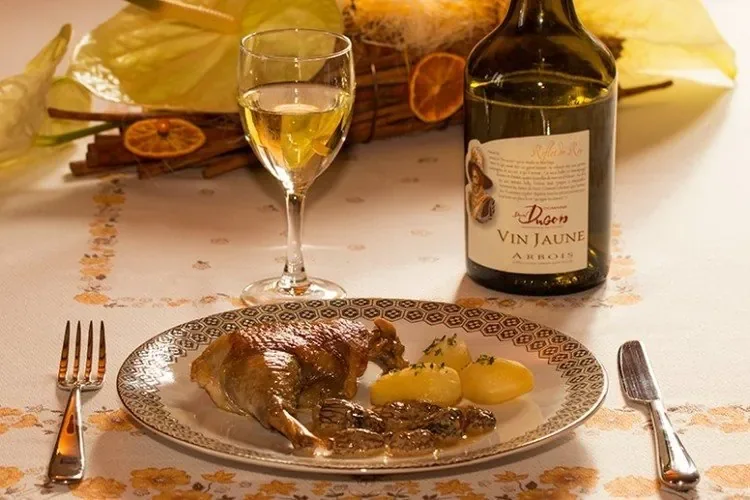
Yes. In the Bresse tradition, the bird's age names the dish. Use the same logic in your kitchen. Read the age, and the method picks itself:
- 12–14 weeks · the young birdDelicate and quick. Spatchcock it: cut out the backbone and press it flat. Roast hot at 425–450°F, or grill over moderate coals, 35–45 minutes to temperature. Salt an hour ahead. Add nothing else.
- 16–19 weeks · the classicThe marbled centerpiece this site is about. Roast at 425°F, then 350°F. Or finish it in cream in the old Bresse farm style. This is the bird the fuss is for.
- 6–12 months · the deep oneBigger flavor, firmer muscle. Braise it, or make poule au pot, the French hen-in-a-pot stew. Or poach then crisp: about 90 gentle minutes in broth, then skin-side down in a hot pan.
- 12+ months · the stock birdA retired layer makes the richest stock you will taste. Roast the bones first. Then simmer for hours, barely bubbling. Nothing in a dual-purpose flock is wasted.
If you remember one row, keep the second. Sixteen to nineteen weeks is where marbling, skin, and frame peak together. Every technique on this page assumes that bird.
Where should you start cooking?
Start with the roast. One bird, one pan, every principle on this page in action. The complete roast recipe is free on this site. Dry brine, butter baste, the two-stage oven, the long rest, and a jus. A jus is a thin sauce made from the pan drippings alone. The recipe is written to be cooked, not skimmed. It is the fastest way to learn what this bird does that others cannot.
The rest of the repertoire lives in the American Bresse recipe book at americanbressechickens.com. The cream classic of the Bresse farm table. Poach-then-crisp for older birds. The holiday capon chapters; a capon is a male bird neutered young for a richer roast. The book is the paid next step, plainly labeled. One excellent recipe here for free. The full craft in the book.
The Bresse Menu Notes
The cook-by-age chart, the oven temperatures, and the resting rules on one printable sheet for the kitchen wall. Sent by email, no strings on it.
What bird does this page assume?
A real one. An American Bresse, or a comparable heritage bird, finished with intent. Not a supermarket roaster with a French accent. The techniques still improve an ordinary chicken. But the payoff this page describes comes from the marbling. The marbling comes from the raising: slow growth on pasture, then a deliberate finishing phase before processing.
Two honest routes to such a bird. Buy one farm-direct from a breeder who finishes table birds. The national breeder directory at AmericanBresse.com lists those farms, and the buying guide on this site covers what to ask and what it costs. Or raise a season of them yourself. Many serious cooks end up in this breed that way. Either way, check the legs. A Bresse-type bird stands on slate-blue shanks, never yellow ones.
For chefs and kitchens
Can a restaurant put true American Bresse on a menu? Yes, with planning. The supply is small-farm and seasonal. Most birds finish in fall, in small batches, and waitlists claim them early. No distributor carries this bird. You buy it the way you buy good lamb or oysters. You go to the producer, ahead of time.
Start with the national directory; serious kitchen inquiries travel fast there. Name your volume, your dates, and your dressed-weight range. A farm can finish birds to your window if you book a season ahead. Expect farm-gate prices plus freight. Plan the menu around the bird, not the bird around the menu. One honest bird as a weekend special beats a promise you cannot restock.
Kitchen questions, answered
Do you need a special recipe for Bresse chicken?
No. You need a normal recipe with better timing. Salt earlier. Roast more gently once the skin has set. Pull the bird a few degrees early. Rest it twice as long as you usually would. The complete roast on this site is that method written out in full.
Does Bresse chicken taste different from regular chicken?
Yes, and the difference is physical. Fat inside the muscle bastes the meat as it cooks. Slices come off the board dense and moist, with a savory depth supermarket birds do not have. The skin of a slower-grown bird roasts thin and crisp instead of flabby.
How long does a Bresse chicken take to roast?
About an hour and a half for a 4–5 lb bird. Give it 20 minutes at 425°F to set the skin. Then 60–75 minutes at 350°F, until the thigh reads 170°F. Add a 20-minute rest before you carve. The rest is part of the cooking.
Can you cook American Bresse like French Poulet de Bresse?
Yes. American Bresse comes from the same genetic root. A well-finished bird carries the same fat inside the muscle. The French kitchen logic applies: gentle heat, few aromatics, a serious rest. But no American bird may be sold as Poulet de Bresse. That name is protected by French law.
What should you serve with roast Bresse chicken?
Less than you think. The pan jus, good bread, and something sharp, like a dressed salad or greens with lemon. The bird is the centerpiece. Sides that need the oven fight it for temperature at the wrong moment.