Bresse-class table birds sell farm-direct in the USA. Small farms sell by waitlist. Pick up at the gate, or have the bird shipped frozen by mail. Start at the national breeder directory at AmericanBresse.com. Ask about age, finishing, and weight. Expect several times supermarket price for a bird raised three times as long.
Where do you buy one?
From the farm that raised it. That is nearly the whole market. American Bresse table birds come from small independent farms. Most sell by reservation and waitlist, not through stores. Start at the national breeder directory at AmericanBresse.com. It lists the farms that finish table birds in one place. From there you are one email away from a real conversation about a real bird.
Two routes branch off the directory. Local pickup: if a farm is close, buy at the gate. You see the flock. You see the legs: slate-blue, never yellow, on anything sold as Bresse type. You carry home a fresh or freshly frozen bird with no freight risk. Mail-order: farms that ship send the bird frozen in an insulated box, usually overnight or two-day. Your map grows from one state to the whole country. The cost is freight, plus a thaw you must plan for.
There is a third route this page only points at. Raise a season of birds yourself. Many serious cooks arrive at the breed this way. The same directory maps the path from chick to table. If the thought has already crossed your mind, that is the door. Every new keeper widens the safety net that keeps a rare breed alive.
Farm pickup or mail-order: which should you choose?
Choose by distance and by what you want to see in person. The bird can be equally good either way. What changes is what you see before paying, and what the logistics cost:
| Question | Farm pickup | Mail-order |
|---|---|---|
| What you can verify | The flock, the legs, the setup, the person | Photos, records, and the farm's answers in writing |
| State of the bird | Fresh or freshly frozen, your choice of date | Frozen, insulated box, overnight or two-day freight |
| Real cost | The bird, plus the drive | The bird plus real freight; frozen shipping in a cold box is not cheap |
| Range | Whatever is drivable | The whole directory, coast to coast |
| Timing | Flexible within the farm's processing dates | Ship dates set by the farm; plan the 2–3 day thaw for the boxed bird |
If both are open to you, pick up the first bird in person. Let mail-order carry the repeat orders. Ten minutes at the farm gate teaches more than a season of emails.
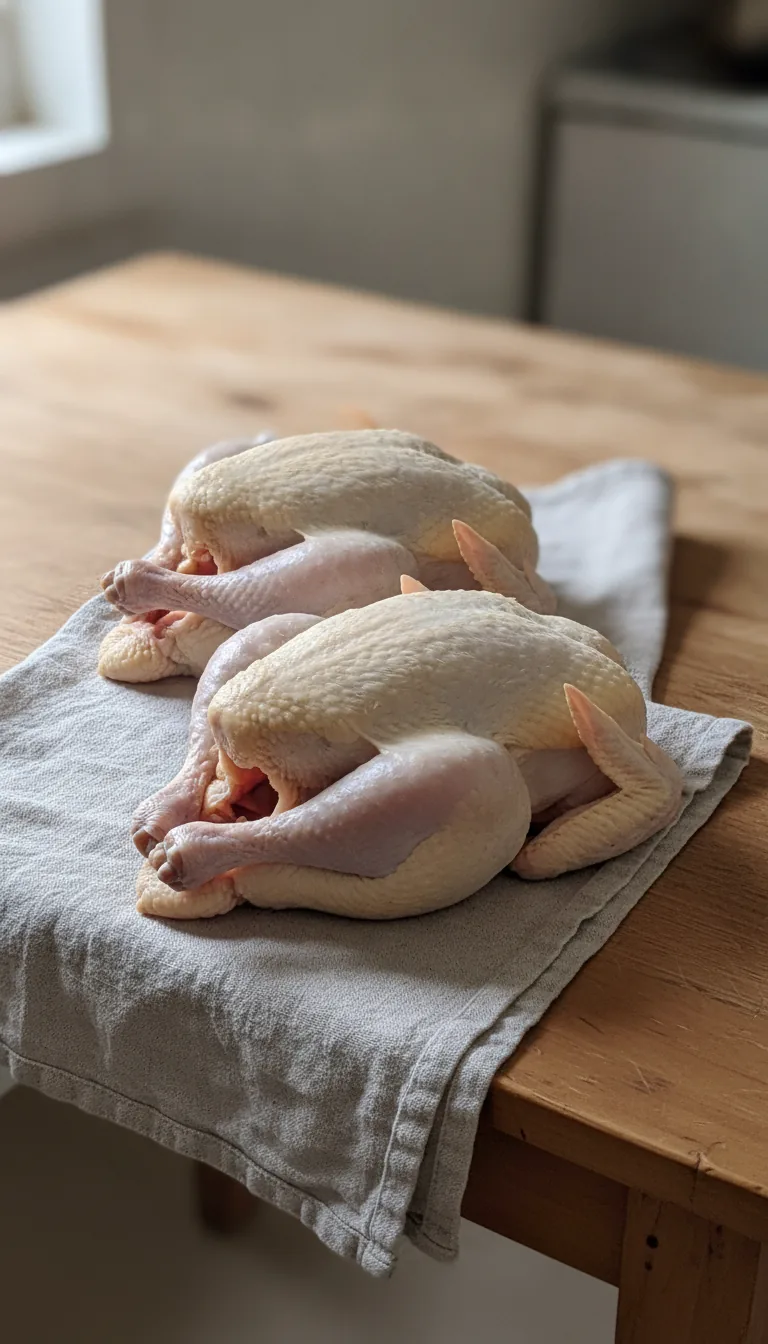
What should you ask before you pay?
Five questions sort table birds the way records sort breeding stock. A farm that finishes birds with intent answers all five without reaching:
The table-buyer's five questions
- "How old was the bird at processing?" The classic window is 16–19 weeks. Much younger is a lighter, simpler bird. Much older belongs in the braise, not the roasting pan. Either can be fine. Just know which dinner you are buying.
- "How was it finished?" Listen for a deliberate final phase: a quieter pen and a richer ration in the last weeks. "We grabbed one from the flock" is not finishing, and the marbling will say so.
- "What does it weigh, dressed?" 4–5 lb is the classic centerpiece. The number also sets your roasting time before the bird arrives.
- "Fresh or frozen, and when was it processed?" Both are fine. Vague dates are not.
- "Can I see the flock's legs?" Slate-blue shanks are the breed's signature. One photo answers what a label cannot.
None of this is an interrogation. Farms doing the work enjoy these questions, because almost nobody asks them. A seller who bristles has told you something worth knowing too.
What does a table-worthy bird cost?
Several times the price of a supermarket roaster. Each farm sets its own number. The math is honest. A supermarket broiler is processed at six or seven weeks, on cheap feed, in bulk. A finished Bresse-class bird eats for 16 to 19 weeks. It ranges on pasture. Then it gets a deliberate finishing phase. That is small-batch labor from hatch to handoff. You are not paying for a brand. You are paying the feed bill.
Hold one rule from the wider breed market: price is a signal, not proof. An expensive bird from a farm that cannot answer the five questions is an ordinary bird with confident pricing. A fairly priced bird from a farm with plain answers about age, finishing, and weight is exactly what it claims to be. One legal note for menu readers: no US-raised bird may be sold as Poulet de Bresse. That is the protected name of the French original. A seller using it loosely is telling you how they handle facts.
Timing is the last lever. Most finished birds are ready in fall, when spring hatches reach the 16–19 week window. Holiday demand takes the December supply early. For a holiday table, contact farms by late summer. Missed the window? Ask about the next processing date. Do not settle for a mislabeled substitute. Once the bird is in hand, the free roast recipe shows you what you bought.
Expect small-farm mechanics too. A deposit holds your bird against a processing date. You get a pickup week or a mailing week, not a delivery hour. A person, not a portal, answers the emails. None of that is friction. It is the shape of a market where the seller knows the hatch date of your dinner. That is exactly what you are paying for.
The Bresse Menu Notes
The five sourcing questions, the cook-by-age chart, and the roast as a kitchen card. One printable sheet, sent by email.
Buying questions, answered
How much does a Bresse-class table bird cost?
Each farm sets its own price. Expect several times the cost of a supermarket roaster. A bird raised 16 to 19 weeks costs more to produce than one raised six or seven. Treat the price as a signal, not proof. The farm's answers about age, finishing, and the flock are the proof.
Can you buy French Poulet de Bresse in the USA?
Fresh, no. France eats nearly all of its own supply, and fresh export to the US is close to nil. An occasional frozen bird surfaces at specialty importers. A US-raised bird sold under that name is mislabeled, because the name is protected by French law.
What should the farm be able to tell you?
The age at processing. How the bird was finished in its final weeks. The dressed weight. Whether it comes fresh or frozen, and when it was processed. Plain answers, from records. A farm that shows you slate-blue legs on its live flock has answered the breed question too.
When should you order for a holiday table?
Months ahead. Most finished birds are ready in fall. Small farms sell by waitlist. December birds are usually spoken for well before December. Contact farms by late summer if the bird is meant for a holiday centerpiece.
Is a frozen bird a downgrade?
Not really, if it was frozen promptly and you thaw it slowly. Give it two to three days in the refrigerator, never on the counter. Most mail-order birds arrive frozen. A well-finished frozen bird beats any fresh supermarket roaster on the table.